
Beyond the Smartphone: Why Cellular Weather Alerts Fail in Industrial, Construction, & Manufacturing Environments
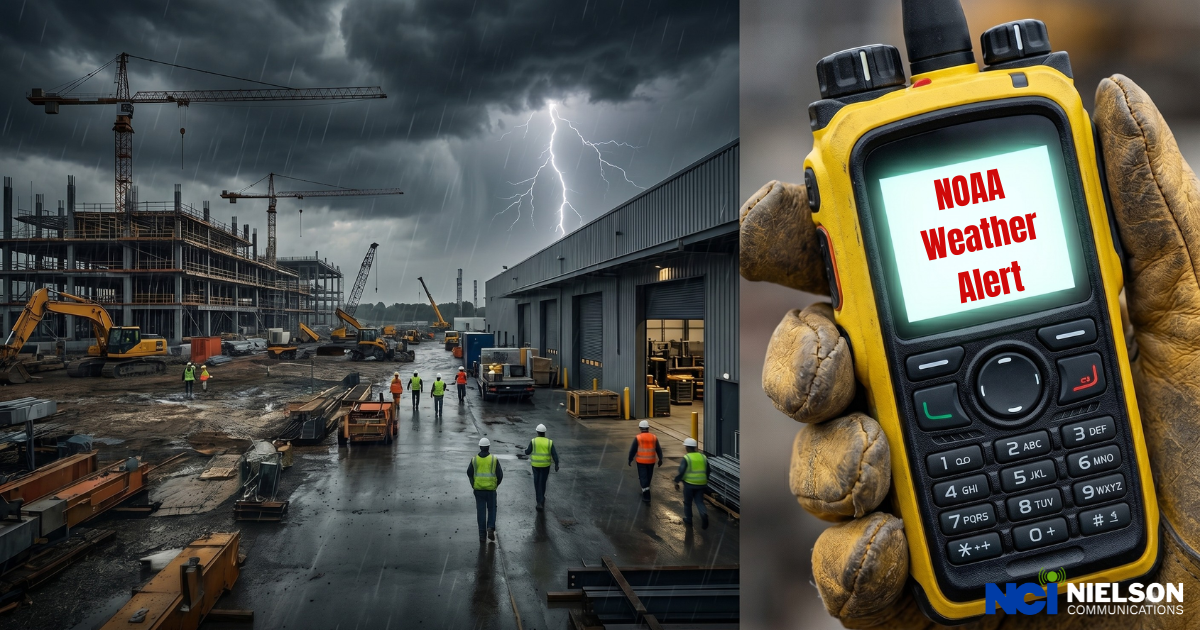
The Reality of the “Cellular Dead Zone”
In the world of industrial, construction, and manufacturing safety, we rely heavily on our smartphones. We use them for logistics, team chats, and most dangerously for severe weather alerts. But there is a technical reality that every Operations and IT Manager in the Midwest needs to face: Cellular networks are designed for convenience, not mission-critical reliability.
When a severe storm front moves into a county, two things happen simultaneously:
- The cellular towers become physically vulnerable to high winds and lightning.
- Network congestion spikes as thousands of people hit their phones at once to check radars or call loved ones.
In an industrial setting, whether it’s a sprawling manufacturing floor, a noisy warehouse, or an outdoor construction site, relying on a “push notification” is a gamble. If the tower is overloaded or the supervisor is in a “dead zone” inside a steel-reinforced building, that tornado warning might arrive three minutes too late. Or not at all.
Why Traditional Alerts Create a Single Point of Failure
Even if the cellular alert goes through, it still hits a communication gap. A supervisor has to hear their phone, pull it out, read the alert, and then manually key up their two-way radio to warn the crew. In a high-stakes environment, those lost seconds are the difference between a safe evacuation and a tragedy.
The Fail-Safe Solution: Weather Eagle NOAA Interface
To bridge the gap between alert and action, we utilize the Weather Eagle NOAA Severe Weather Alert Interface. Unlike smartphones, which rely on a fragile web of towers and data centers, the Weather Eagle connects your existing two-way radio system directly to the National Weather Service’s dedicated radio frequency.
- Off-Grid Reliability: NOAA radio waves travel even when the power is out, and towers are down, ensuring you aren’t left in the dark during a total infrastructure failure.
- Zero Latency: By removing the manual relay delay, the moment an alert is broadcast, it is automatically pushed to every radio on your team’s hip.
- Industrial Precision: We customize the interface to monitor only your specific Wisconsin or UP counties, filtering out unnecessary “noise” so your team only reacts to actionable threats.
Bridging the Compliance Gap: Your Duty of Care
For HR and Safety Directors, weather safety isn’t just a best practice; it’s a legal obligation. Under Workplace Safety Standards, employers have a “Duty of Care” to protect staff from foreseeable hazards. If your Emergency Action Plan (EAP) relies on a supervisor’s personal cell phone signal to warn a hundred people on a manufacturing floor, you may be facing a significant liability gap. Automating your life-safety alerts through your P25 or two-way radio infrastructure ensures that your EAP is robust, repeatable, and most importantly, compliant with modern safety expectations.
The Bottom Line: Don’t Leave Your Team’s Safety to Chance
True industrial safety means ensuring your team remains aware and protected even when the public infrastructure fails; by the time the storm hits, the opportunity to prepare has already passed.
Are there gaps in your plan? Don’t wait for the next storm to find the “dead zones” in your communication plan. Download our 2026 Severe Weather Readiness Audit to identify dangerous gaps in your Emergency Action Plan before the sirens sound.